
Siding Replacement in Alpharetta: Will the New Boards Match the Rest?
Learn how to compare siding samples with an existing wall and decide whether a limited replacement or a complete wall will look more consistent.
Start With Shape, Not the Paint Chip
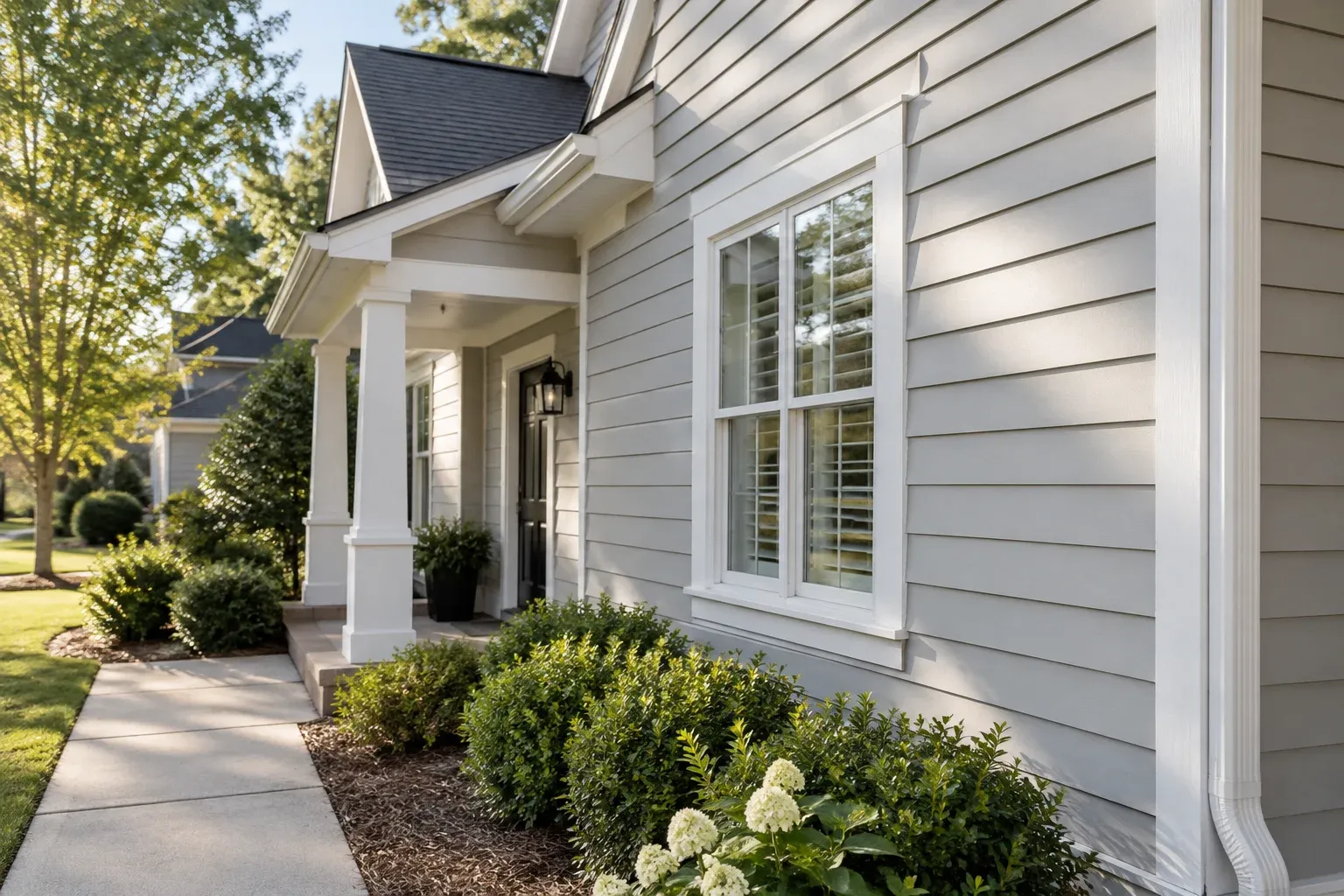
Planning siding replacement in Alpharetta often starts with a reasonable question: will the new boards disappear into the existing wall? A paint chip cannot answer that. Two products can share nearly the same color yet look noticeably different once sunlight catches their edges. For homeowners expecting to live with the result for years, the useful comparison is between physical shapes, not just painted surfaces. Start with the existing siding’s profile, exposed height, texture and repeating shadow lines.
Siding replacement decisions become clearer when you separate appearance from technical suitability. A sample may look convincing but still be unsuitable for joining the existing system. Conversely, an appropriate replacement product may remain visibly different. This guide addresses that second question: what will the wall look like? Whether the existing assembly can accept a particular product requires a separate evaluation of the materials and installation requirements. Neither a color match nor a pleasing sample settles that issue.
Compare the Profile and Lower Edge
Profile means the shape of the siding face and how its edges meet or overlap. Traditional beveled lap siding, a shaped horizontal profile and a panel made to resemble several boards do not create interchangeable patterns. Look at the wall from an angle as well as straight on. Notice whether each course ends in a crisp projecting edge, a rounded contour or a recessed channel. These differences establish the wall’s rhythm before color enters the comparison.
Request the candidate product’s exact profile designation rather than relying on descriptions such as traditional or wood look. Similar names do not establish identical geometry. If a loose original offcut is available, it can help identify the shape; do not remove sound siding just to obtain one. Otherwise, clear photographs and accessible measurements can support the discussion. A short sample helps assess the face, but it cannot show how several installed courses will interact across a broad wall.
Check Exposure Across Several Courses
Exposure is the visible height of each installed course, not necessarily the full width of the board. Measure the repeating distance between equivalent points on adjacent courses, using an accessible area at ground level. Check several courses rather than trusting one measurement. Existing walls can contain small variations, and a single reading may be misleading. Record the pattern near windows and corners too, where a replacement section would need to relate visually to the siding that remains.
Small exposure differences accumulate. A quarter-inch difference repeated across twelve courses creates a three-inch change in the overall pattern. That can make horizontal lines drift noticeably beside an unchanged section or window. Do not assume an installer can simply alter overlap until everything aligns: each product has installation limits. Ask whether the proposed material can match the existing exposure within its requirements. If not, the sample’s attractive color is less important than the resulting break in the wall’s horizontal lines.
Read Texture and Shadow Lines in Daylight
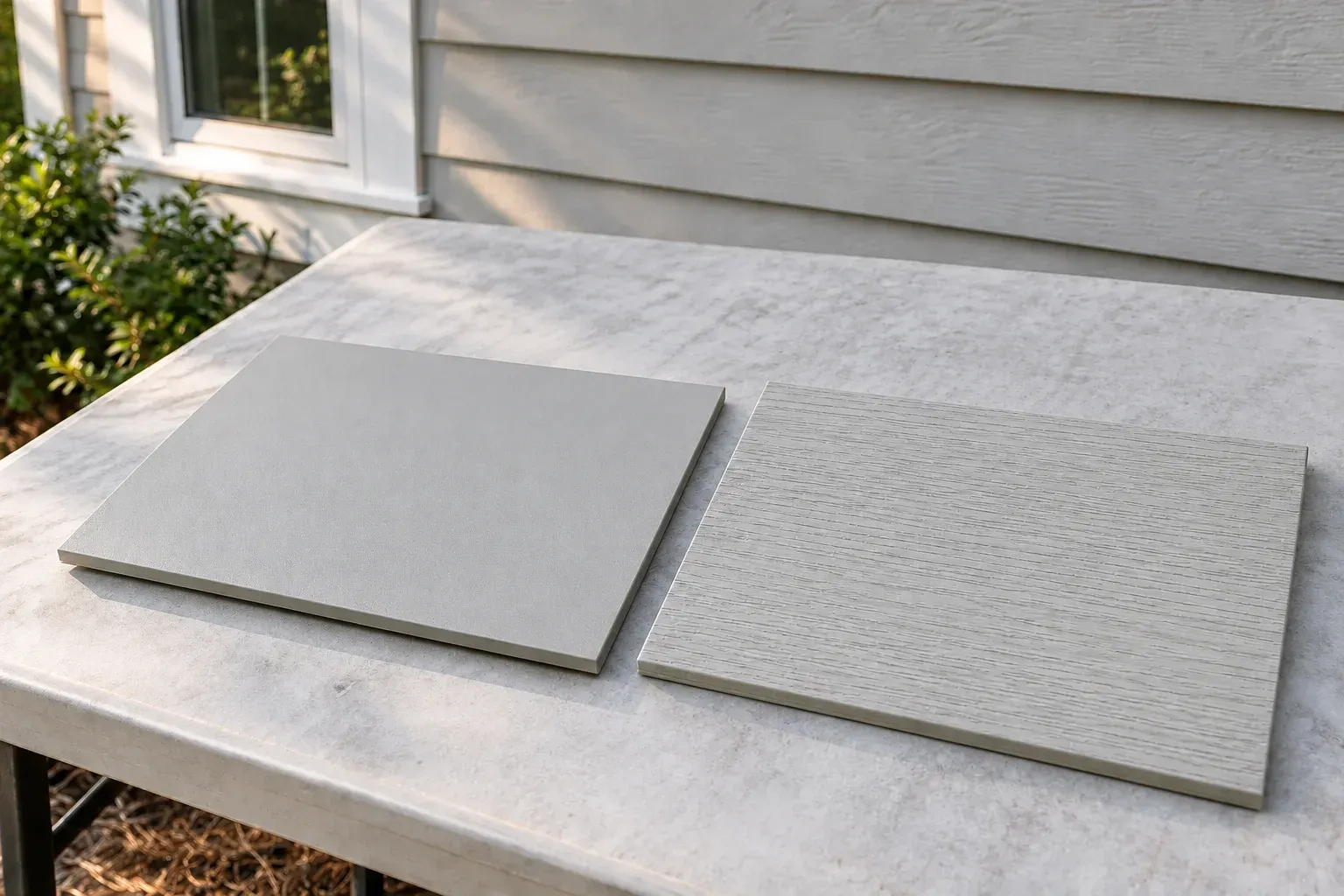
Surface texture deserves its own comparison. Smooth siding, pronounced embossed grain and naturally irregular wood can reflect light differently even under similar paint. Look at the size, depth and repetition of the texture, not merely whether both samples are called woodgrain. An older wall may also have softened details beneath previous coatings. A fresh, sharply patterned board placed within that surface can stand out without being a different color.
Then inspect the shadows beneath the courses. Board thickness, edge shape and projection influence those dark horizontal bands. View the existing wall in diffuse daylight and again when sunlight crosses it at an angle. A mismatch that disappears on an overcast morning may become obvious later. Finish sheen can add another variable, so compare equivalent finishes when possible, following the material’s coating guidance. Paint can change reflectance and color; it cannot remove a deeper ledge or reshape an edge.
Make the Sample Comparison Repeatable
Use a physical sample outdoors beside the wall rather than making the decision from a screen. Keep it upright in the same orientation as the existing siding, without attaching it or disturbing the wall. Compare it from close range, then step back to the driveway or normal approach. Close inspection reveals texture; distance reveals whether the horizontal pattern belongs. Photograph both views for reference, but make the final visual judgment in person because cameras can simplify surface and color differences.
The sample-review principle also appears in the sample-door comparison guide: inspect a representative physical surface instead of approving an abstract color alone. For siding, add the outdoor variables of viewing distance and changing sunlight. Keep a brief record of the product name, profile, exposure and finish being considered. Otherwise, it is easy to approve one sample and later compare a different variation without recognizing why the appearance changed. A useful sample review ends with identified differences, not just a general impression.
- Compare the sample upright beside the existing siding.
- Check both close detail and normal viewing distance.
- Record profile, exposure, texture and finish separately.
- Review the comparison in diffuse and angled daylight.
Choose a Section or a Complete Wall Deliberately
A limited replacement is easier to blend when the profile, exposure and texture closely match what remains. It becomes harder when a contrasting product sits in the middle of an uninterrupted wall. Consider where the eye will encounter the change: beside an entry, across a long sunny elevation or behind a less prominent return. Visibility does not determine technical suitability, but it helps you decide how much visual difference you are willing to accept.
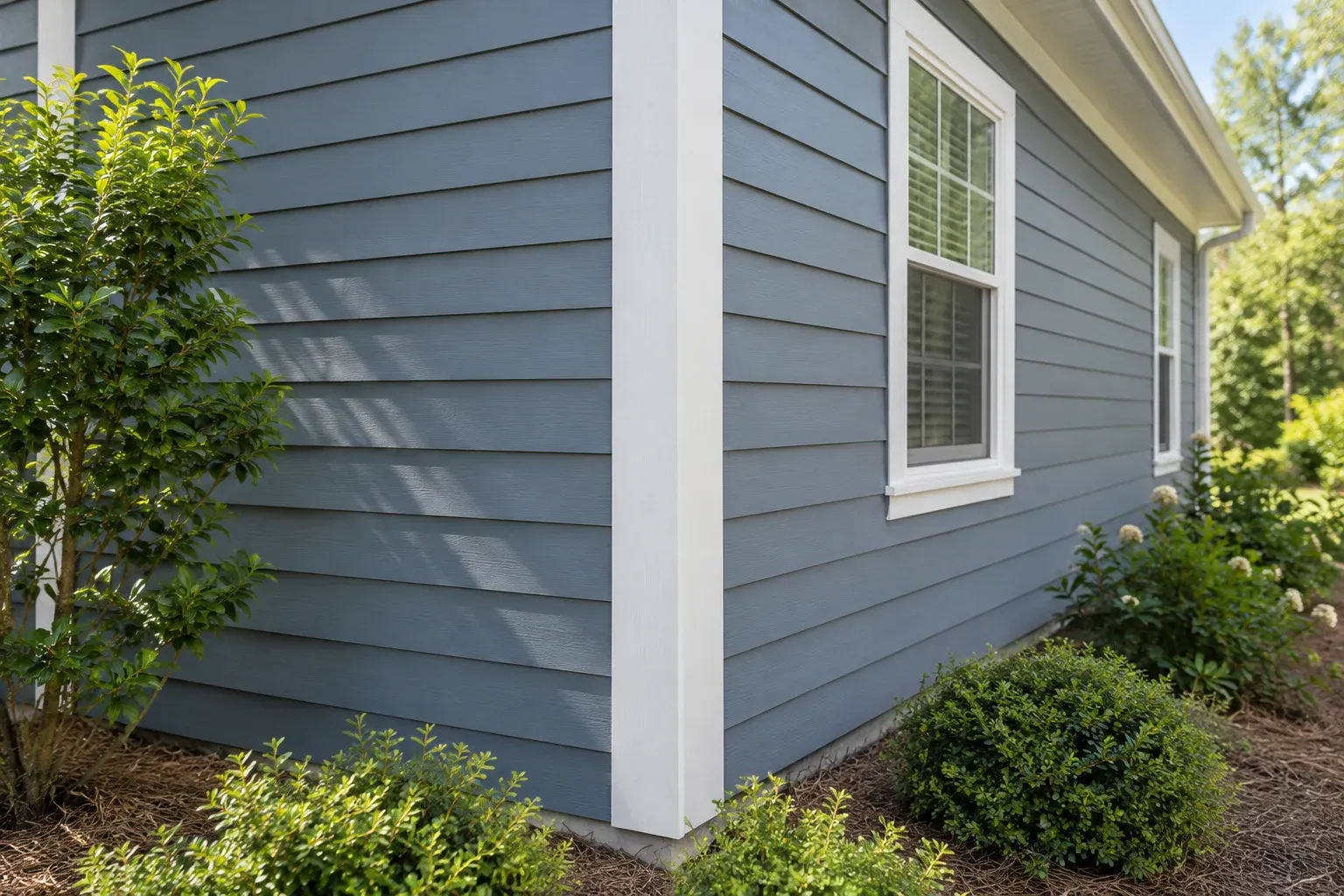
Replacing one complete wall can create consistency within that elevation when a close match is unavailable. Corners and substantial trim provide clearer stopping points than an arbitrary rectangle of different boards. This does not automatically justify replacing the entire house. Compare the whole-wall option with a smaller section using the same viewing positions. Keep condition questions separate: the guide to planning for concealed siding damage addresses uncertainty that a surface comparison cannot resolve. Appearance alone should not define the final scope.
Choose With the Whole Wall in View
Before choosing siding replacement in Alpharetta, write down which differences are acceptable and which would bother you every time you approach the house. A close color with a conspicuous shadow line may be a worse compromise than a consistent new wall ending at a corner. The goal is not to promise an invisible repair. It is to choose a visually coherent scope with a clear understanding of what the sample can—and cannot—match.
Frequently asked questions
Will matching paint make different siding boards look the same?
Matching paint can reduce color differences, but it cannot change a board’s profile, exposed height, edge shape or surface texture. Those physical features can remain visible, particularly in angled sunlight.
Is the width printed on a siding label the same as its exposure?
Not necessarily. Board width describes the full piece, while exposure is the portion visible after installation. Compare the existing wall’s exposed courses with the candidate product’s permitted installation dimensions.
Does a visible mismatch mean the entire house needs new siding?
No. A complete wall bounded by corners or trim may provide a coherent appearance without replacing every elevation. The appropriate scope also depends on material compatibility and wall condition, not appearance alone.